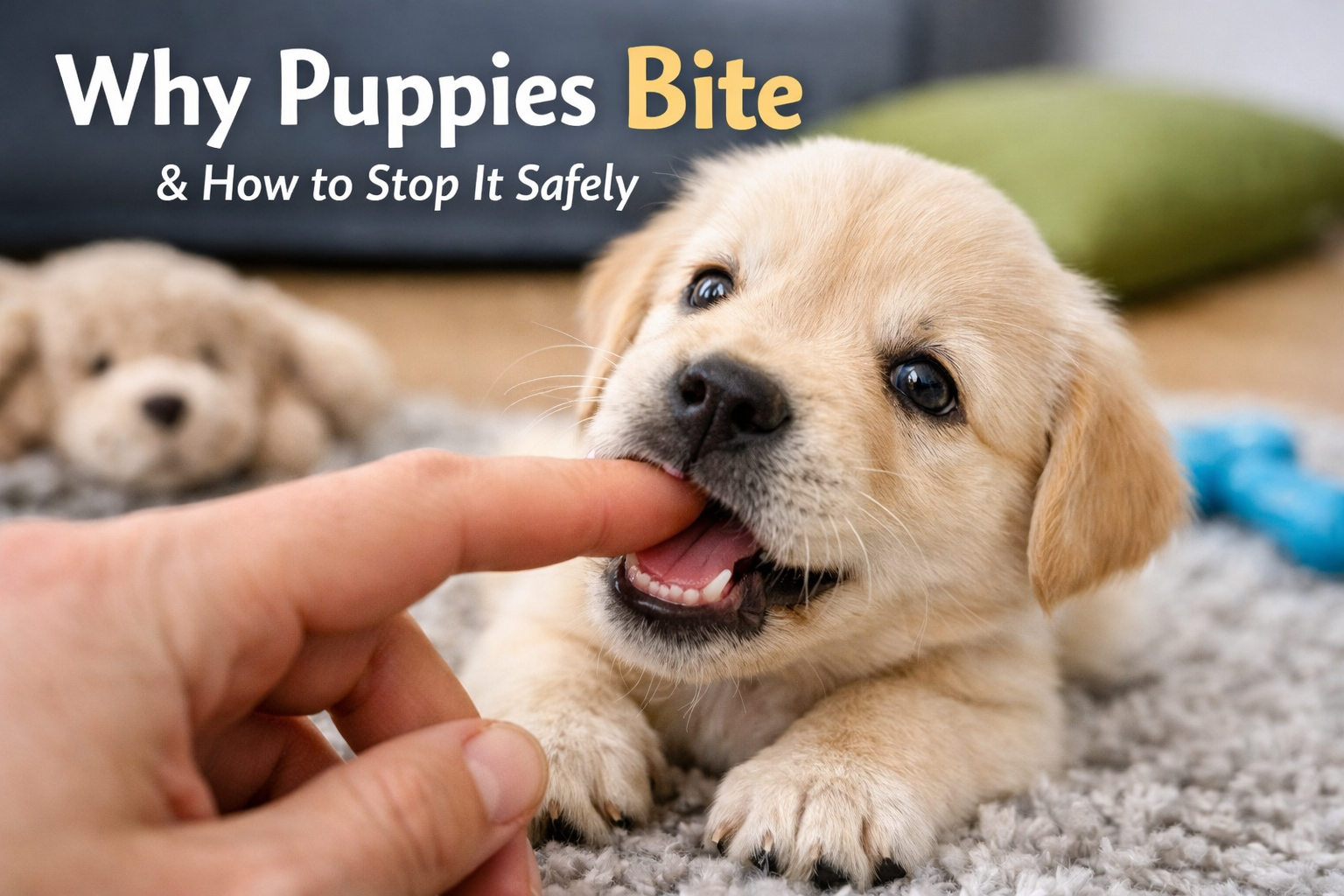
Puppy biting is one of the most common concerns new dog parents face. Many assume it’s aggression or bad behaviour, but in reality, biting is a normal developmental stage. The key is understanding why puppies bite and how proper training redirects that behaviour safely and effectively.
Working with dogs daily in North York, we regularly meet pet parents who are worried about nipping, mouthing, or sudden biting during play or handling. The good news is that with the right approach, puppy biting is highly manageable and usually temporary.
Biting is not misbehaviour, it’s communication and exploration. Puppies use their mouths the way human babies use their hands. Common reasons include:
Understanding the cause is the first step toward correcting it.
8–12 weeks
Puppies explore everything with their mouths. Nipping is frequent but usually gentle.
3–4 months
Teething begins. Biting increases due to gum discomfort.
4–6 months
Adult teeth develop. Puppies test boundaries and reactions.
6 months+
If biting hasn’t been addressed, it can become a learned habit rather than a phase.
Occasional mouthing is normal. However, biting needs attention if your puppy:
These signs indicate the puppy is not learning proper bite inhibition or emotional regulation.
Bite inhibition is a dog’s ability to control jaw pressure. Puppies normally learn this from littermates. When one bites too hard, the other yelps and play stops. This teaches the puppy that biting ends fun.
If puppies are separated from their litter early or lack structured training, they may never fully learn this skill. Training replaces that missing lesson.
Many well-meaning owners unintentionally reinforce biting. Common mistakes include:
Pulling your hand away quickly
This triggers the chase instinct.
Using hands as toys
This teaches puppies that hands are appropriate things to bite.
Yelling or punishing
This can increase fear and defensive biting.
Inconsistent rules
If biting is allowed sometimes and corrected other times, puppies become confused.
Structured training teaches puppies:
Effective methods include:
Redirection
Offer a toy immediately when biting starts.
Pause & Ignore
Stop interaction briefly so the puppy learns that biting ends attention.
Reward Calm Behaviour
Reinforce gentle play and relaxed responses.
Structured Socialization
Exposure to new environments builds confidence and reduces reactive biting.
Urban puppies growing up in busy cities like Toronto experience more stimulation from traffic, strangers, sounds, and confined spaces. Without early training, overstimulation can lead to frustration biting.
City dogs especially benefit from:
If biting persists beyond early puppy months or becomes intense, structured help is recommended. Trainers can identify triggers, body language signals, and emotional patterns that are difficult for owners to interpret alone.
Teams such as Hello Pets Inc. often notice early behavioural signs during routine handling or grooming and can guide owners toward appropriate next steps when needed.
Early guidance is always easier than correcting established habits.
Practice daily:
Consistency teaches faster than intensity. Short, repeated lessons work best.
Training is working when you notice:
Progress usually appears gradually, not overnight.
Puppy biting is not a sign of aggression; it’s a sign of learning. With patience, structure, and proper guidance, most puppies outgrow biting quickly and develop safe, gentle behaviour.
For dog owners raising puppies in North York, early training is one of the most valuable investments you can make. It prevents future problems, builds trust, and sets the foundation for a confident, well-behaved companion. Puppies Training Location in North York
Is puppy biting normal?
Yes. It’s a natural developmental phase.
At what age should biting stop?
Most puppies improve significantly by 5–6 months with consistent training.
Should I punish my puppy for biting?
No. Punishment increases fear and can worsen behaviour.
What’s the fastest way to stop biting?
Consistent redirection and reward-based training.
Does teething cause more biting?
Yes. Teething discomfort often increases mouthing behaviour.
When should I worry about biting?
If bites are intense, frequent, or aggressive, seek professional guidance.