You brush your pet regularly, yet mats keep appearing. That can be frustrating, especially when you feel you are already doing the right thing at home. It may also make you wonder whether you are brushing incorrectly or whether your pet simply has a difficult coat.
The truth is that regular brushing does not always mean effective brushing. Mats often form because certain areas are missed, the wrong tool is used, loose undercoat remains trapped, or brushing only reaches the surface of the coat. If you are trying to stay on top of pet grooming in North York, understanding why mats return is the first step toward preventing them.
A coat can look smooth on the surface while tangles are developing underneath. This is especially common in thick, curly, long, or double coats.
A brush may glide across the top layer without reaching the hair closer to the skin. Over time, loose hair catches around surrounding strands. Friction tightens those tangles, creating mats that may seem to appear suddenly.
In reality, most mats develop gradually. They often begin in an area that regular surface brushing does not reach.
Mats rarely form evenly across the whole body. They tend to appear in areas where there is movement, moisture, friction, or repeated pressure.
Common problem spots include behind the ears, under the collar, around the armpits, beneath the chest, around the legs, near the tail, and anywhere a harness regularly sits. These areas are easy to overlook during a quick brushing session.
Some pets also dislike having these spots brushed, so owners may unconsciously spend less time there. Check them separately instead of assuming that a quick full-body brush has covered everything.
One of the biggest reasons mats return is shallow brushing. The tool moves through the outer coat, but the deeper hair remains untouched.
This can make the coat look neat while tangles continue forming underneath. The problem is especially common with dense or curly coats because the surface can appear smooth even when the lower layers are beginning to knot.
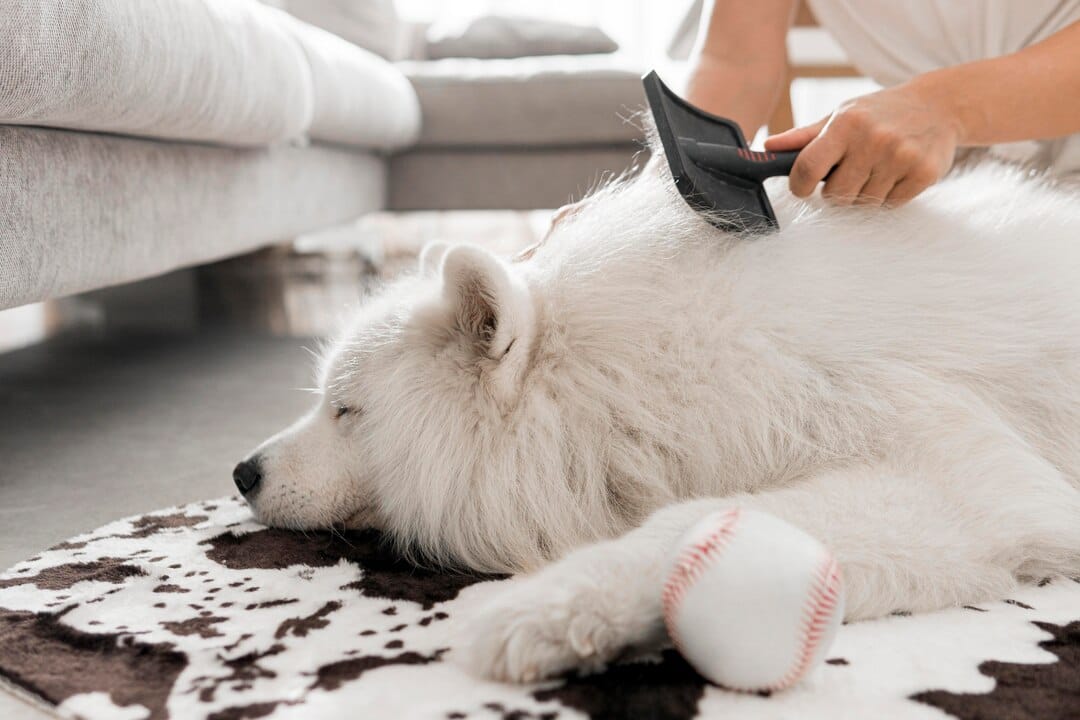
Work through the coat in small sections. Gently part the hair and make sure you are reaching the lower layers without scraping the skin. If you repeatedly hit resistance in the same place, stop and inspect the area instead of pulling harder.
Wet hair tangles easily. Rain, snow, bathing, swimming, licking, and even damp paws can contribute to mat formation.
If the coat dries while tangled, those tangles may tighten. This is particularly important in areas with dense hair or areas where the coat rubs against itself as the pet moves.
After your pet gets wet, gently separate the coat and dry it properly. Avoid rubbing a long or curly coat aggressively with a towel, as this can twist strands together. Blot away moisture instead and check high-friction areas once the coat is dry enough to handle comfortably.
Anything that repeatedly rubs against the coat can contribute to matting. Collars, harnesses, sweaters, jackets, and recovery garments can all create friction.
The issue is not necessarily the item itself. The problem develops when the hair underneath becomes compressed, shifted, and rubbed repeatedly as your pet moves. Loose strands can then become trapped and knot together.
Remove collars or harnesses during grooming when it is safe to do so. Check the hair underneath them regularly. Pets that wear clothing during colder weather may need extra coat maintenance because more of the body is exposed to repeated friction.
Some coats naturally require more detailed maintenance. Curly coats can trap loose hair instead of allowing it to fall away. Double coats may hold a large amount of loose undercoat beneath the outer layer. Long coats can tangle whenever sections rub together.
That means two pets can be brushed for the same amount of time and still need completely different grooming routines. Your pet’s coat type should determine the technique, tools, and frequency.
Frequency alone is not enough. Five minutes with an unsuitable tool may accomplish less than a careful section-by-section grooming session using the right approach.
Once a mat becomes tight, aggressive brushing is not the solution. Pulling on a mat also pulls on the skin, which can make grooming painful.
Repeated painful brushing may also teach your pet to dislike being groomed. They may become restless, defensive, or avoid brushing sessions altogether.
Do not keep tugging simply because you want to preserve coat length. Comfort should take priority over appearance. Small, loose tangles may sometimes be managed carefully, but tight mats close to the skin often require a different approach.
Trying to cut out a mat at home can also be risky. Skin may be pulled up into the mat and become difficult to see clearly.
Do not rely only on scheduled brushing sessions. Your hands can help you find developing tangles before they become severe.
Run your fingers through areas that commonly mat. Feel for small knots, thickened sections, or places where your fingers no longer move freely through the coat. Finding a small tangle early is much easier than dealing with a tight mat later.
This is particularly useful after rainy walks, outdoor play, wearing a harness, or any activity that leaves the coat damp or compressed.
Mats are not simply untidy sections of fur. As a mat tightens, it can pull on the skin whenever your pet moves.
Large or dense mats may also trap moisture and debris close to the body. Pets may lick, scratch, or avoid being touched in those areas because the skin feels uncomfortable.
This is why preventing matting should be viewed as part of routine coat care rather than just appearance maintenance.
Effective home care does not need to be complicated. It does need to be consistent.
Brush in sections rather than quickly passing over the entire body. Spend extra time on friction areas. Check the coat after it becomes wet. Use your fingers to identify early tangles before they tighten.
Most importantly, adjust the routine to your individual pet. A short-coated pet and a dense curly-coated pet should not have identical grooming schedules.
If the same areas keep matting despite regular home care, the issue may be your technique, coat type, moisture, friction, grooming frequency, or a combination of several factors.
Professional pet grooming in North York can help identify where mats are repeatedly developing and where your routine may need adjustment. The goal should not only be removing existing mats. It should be reducing how often they return.
Contact Hello Pets to discuss your pet’s coat condition, grooming routine, and the best way to keep recurring mats under control.